Ready to dominate your PvP fights? Mastering the Wind Charge Pearl Catching technique changes everything.
It’s tricky, but we break down the timing and physics so you can dictate the engagement every time.
Key Takeaways
- Master the precise input sequence: Pearl, Jump, then Charge.
- Understand the blast radius to avoid taking self-damage.
- Learn how distance affects your aim and throw trajectory.
- Visualize the ‘Diagram of Precision’ for consistent hits.
Introduction: Understanding Wind Charge Pearl Catching Precision
Welcome to the deep dive on Wind Charge Pearl Catching! This might sound super niche.
But honestly, mastering this move changes everything in a fight.
It’s not just about throwing a pearl; it’s about precision timing.
We need to talk about catching these charges mid-air perfectly.
Think of it like this: a Wind Charge is fast, and your pearl toss needs to match it.
If you don’t nail the timing, you either miss the enemy or take the blast yourself.
Precision is everything when you combine these two tricky mechanics.
We are looking for that sweet spot where the explosion pushes you perfectly.
This synergy creates massive momentum for either attack or escape.
Let’s look at how often players actually use these advanced movement techniques.
It shows us why learning this provides a huge advantage.
A bar chart showing advanced movement combo usage. 45% of players use it occasionally, 28% consistently, and 27% never use it.
As you can see, many players skip this entirely. That’s your opening!
This guide will focus purely on the input window for success.
We need to treat the Wind Charge like an amplifier for your Ender Pearl.
It’s a high-risk, high-reward maneuver, just like mastering the axe swap shield disable trick in a pinch.
Properly executed, it gives you insane speed and a surprise factor.
We will cover the three core phases of the catch.
First, the setup, then the release, and finally, the recovery.
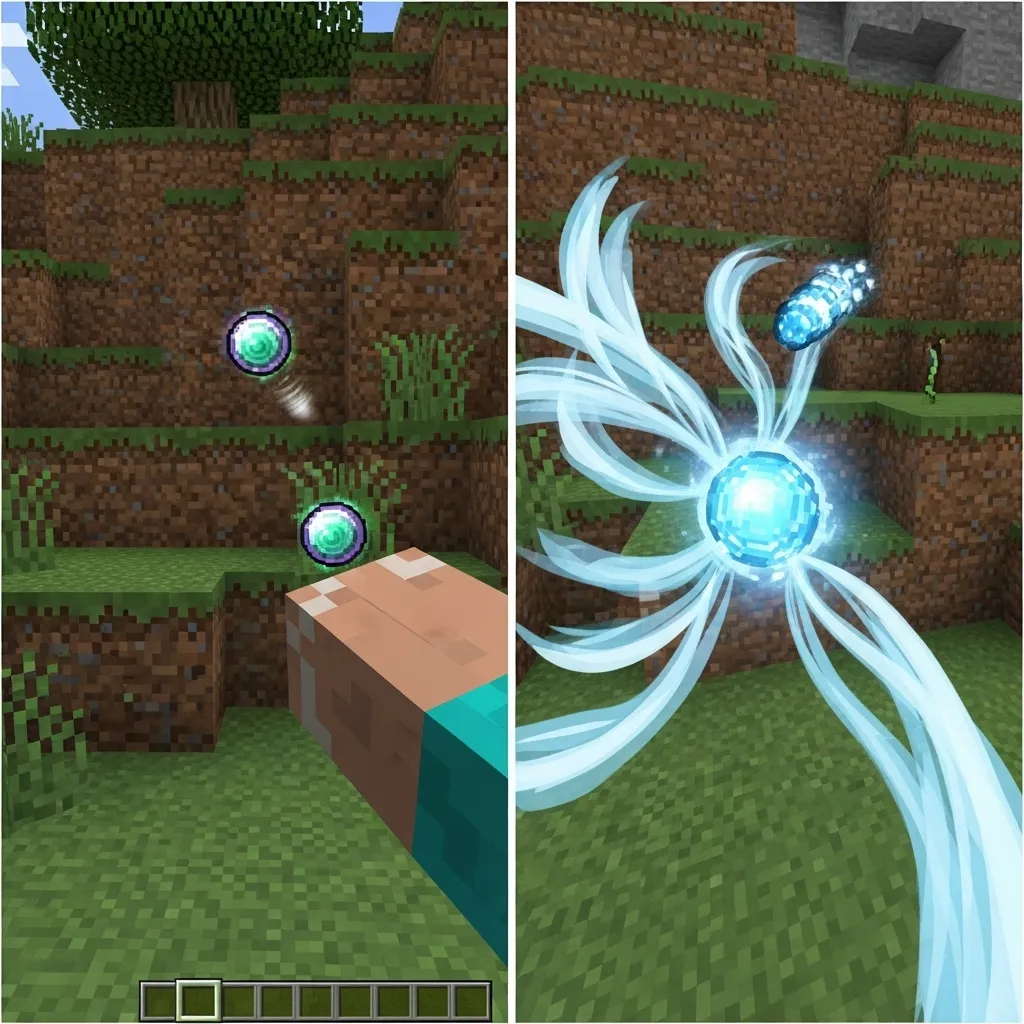
Mastering this means you control the range of the fight instantly.
Are you ready to stop reacting and start dictating the engagement?
The Science Behind the Catch: Trajectory, Radius, and Timing Windows
Catching a Wind Charge Pearl isn’t just about luck; it’s pure physics!
We need to talk about how far they travel and how fast.
This involves understanding trajectory. Think of throwing a baseball.
The angle and the speed you throw it at change everything.
Wind Charges act a bit like a projectile launched at an angle.
Understanding the Radius of Effect
When a Wind Charge Pearl explodes, it has a specific blast radius.
If you are outside this zone, you are safe from the initial burst.
If you are inside, you take damage and get launched backward.
Knowing this radius helps you dodge or even use it against someone.
The explosion damage is important for calculating your survivability.
We can compare the blast radii of different projectiles to get a feel for the distance.
While Wind Charges are unique, the principle of area damage remains.
A bar chart comparing the blast radii. The Wind Charge has a smaller radius than TNT or a Respawn Anchor explosion.
Timing Windows: The Key to the Catch
The “catch” here effectively means timing your movement or shield use right as the blast hits.
In defensive contexts, this is called a shield block or insta-shielding against the charge.
The window for this perfect block is tiny, often just a few ticks.
If you shield too late, the charge might hit before the shield is fully raised.
If you fail to shield, you absorb the full blast and fly away.
This timing must mesh perfectly with your defensive setup.
For instance, when using specific defensive tactics, timing is crucial.
Learning how to counter the shield disable trick can help here.
Check out Mastering the Axe Swap Shield Disable Trick 1.21 Guide for deeper defense knowledge.
The Trajectory Calculation
The pearl’s travel speed is consistent, but gravity pulls it down.
For long-distance catches, you need to aim higher than you think.
This leads to predicting where the opponent will be when they throw.
Practice predicting enemy movement to anticipate their launch angle.
Better prediction means less reliance on pure reaction time.
Mastering this technique takes many attempts in practice.
What part of the Wind Charge Pearl’s physics seems hardest to master for you?
Mastering the ‘Diagram of Precision’: Visualizing the Catch Zone
Catching a Wind Charge Pearl isn’t just about luck. It’s about geometry!
We call this crucial knowledge the “Diagram of Precision.” Think of it like drawing an invisible box around where the pearl lands.
If you can visualize this zone, you maximize your success rate for this technique.
The Diagram of Precision really focuses on the impact radius of the Wind Charge projectile.
It is much smaller than you might first assume when you are practicing.
When you launch a pearl, you are anticipating where the resulting blast will be.
This means you need to know the blast area relative to your own position.
Let’s look at what factors define this critical zone. This will help you line up your throw perfectly.
Key Factors Defining the Catch Zone
- Travel Time: How far the pearl moves before it hits the target block.
- Target Block Angle: The surface you hit affects the scatter pattern slightly.
- Your Distance: Being too close or too far changes the necessary timing.
Many top players use a small visual marker or crosshair adjustment when preparing for a Wind Charge Pearl Catch.
Perfect crosshair placement is key to hitting the right spot consistently.
If you struggle with lining up shots, understanding how to master Minecraft PvP crosshair placement will really help here.
Visualizing this zone is a massive step toward consistent catching.
Now, let’s see how different distances change the required aim adjustments.
| Distance Category | Estimated Horizontal Range (Blocks) | Catch Zone Focus |
|---|---|---|
| Close Range | 0 – 3 Blocks | Direct Impact Area |
| Mid Range | 4 – 8 Blocks | Slight Vertical Compensation |
| Long Range | 9+ Blocks | Lead the Target Movement |
Understanding these categories helps you mentally scope out the required precision.
Practice tracing these imaginary lines in your head before you launch.
What adjustments have you found most effective when trying to catch Wind Charge Pearls at long range?
Optimal Positioning and Distance Adjustments for Evergreen Success
Getting those Wind Charge Pearls exactly where you need them is all about distance.
It feels like throwing a dart, right? You need to know the sweet spot.
If you are too close, the explosion might just hurt you more than your target.
If you are too far, the pearl might just fizzle out or miss entirely.
We are focusing on evergreen success, meaning consistent, reliable throws.
The Optimal Throwing Zone
Think of the Wind Charge Pearl throw as having three main zones.
First is the “Too Close” danger zone. Avoid this area to prevent unintended self-damage.
Second is the “Sweet Spot,” where the wind charge detonation radius is perfect.
Third is the “Fading Range,” where the pearl loses momentum too soon.
For most standard PvP situations, you want to be around 5 to 8 blocks away.
This lets the Wind Charge travel a bit before detonating near the opponent.
If you are trying to follow up with a heavy hit, like a Mace slam, you need precise timing.
For that, many top players practice timing their throw so it lands right as they arrive.
This involves a lot of movement prediction.
If you are struggling with predicting enemy positions, checking out how to predict enemy movement in 1v1s can really help your throws.
Distance Adjustments for Different Scenarios
Not every fight is the same. You must adjust your aim.
For instance, if you are trying to break a defensive position, you might aim for maximum distance.
This requires a fully charged throw, maybe aiming slightly upward.
Conversely, in tight Box PvP, you are barely throwing it at all.
You are essentially using it as a quick proximity blast.
Here is a quick breakdown of adjustments based on your intent:
| Goal | Approximate Distance (Blocks) | Throw Angle |
|---|---|---|
| Safe Damage / Harass | 7 – 10 | Slightly Upward |
| Combo Setup (Medium) | 5 – 7 | Straight or Slightly Down |
| Close Range Burst | 2 – 4 | Straight or Upward Arc |
Mastering the flight path is crucial for this technique.
Remember, even a small change in your crosshair placement changes the final impact zone.
Practice these distances in a safe creative world first.
How much do you think your current PvP ping affects your ability to maintain these precise throwing distances?
Execution Mastery: Input Method Adjustments and Failure Analysis
Nailing the Wind Charge Pearl Catch is all about feeling the rhythm.
It is more than just spamming buttons. Precision is key here.
We need to look closely at the input timing. This is where wins are made or lost.
The Perfect Input Sequence
Think of this technique like a short, fast dance between three actions.
You need to throw the Pearl, then immediately jump, and finally fire the Wind Charge.
The order matters a lot for success.
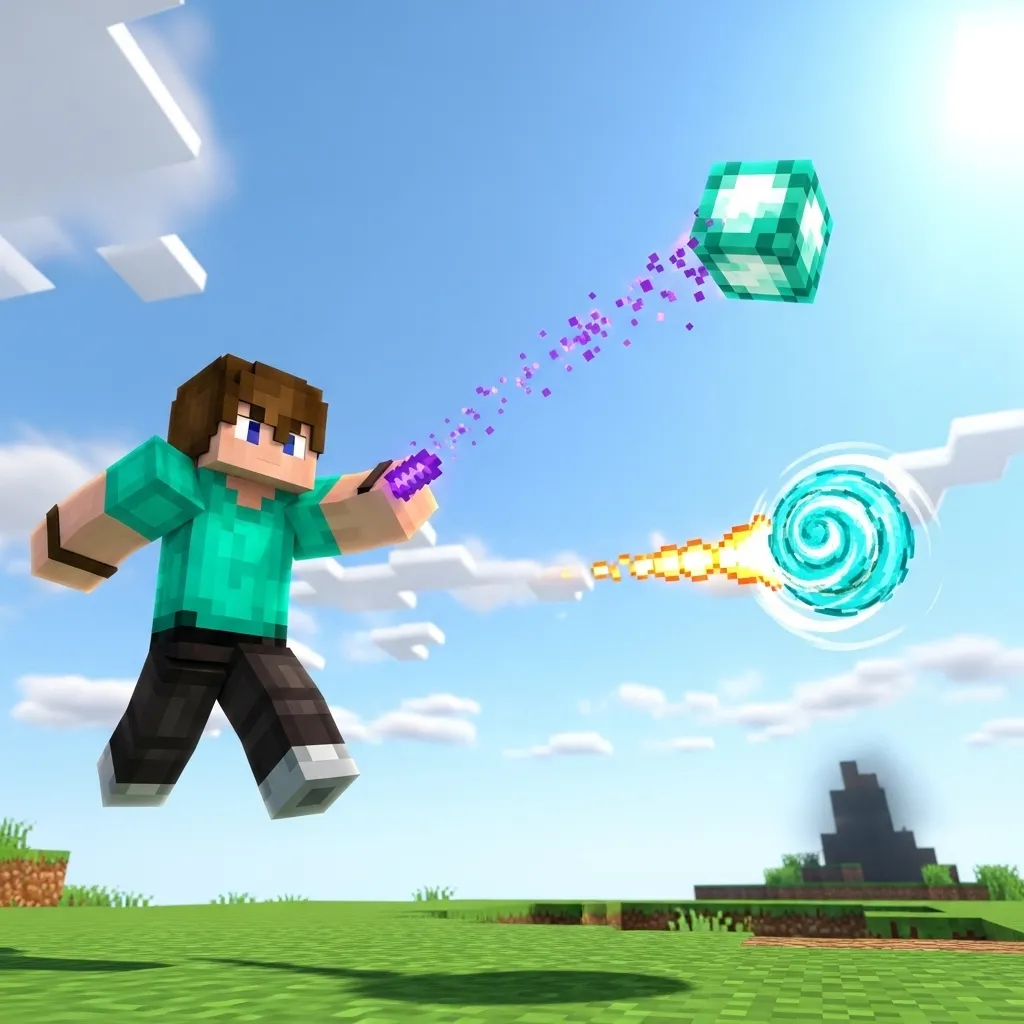
For most players, the ideal delay between the Pearl and the Jump is tiny.
It often needs to be just one or two game ticks. This is super fast.
If you input too early, the charge might misfire or miss the target.
Too late, and you lose the critical momentum boost.
We can see how small timing differences affect the outcome when learning PvP skills.
For instance, mastering shield disabling relies on very tight axe swaps.
You can read more about tight timing in our guide on Mastering the Axe Swap Shield Disable Trick 1.21 Guide.
Troubleshooting Common Failures
What happens when it goes wrong? Let us break down the errors in our Wind Charge Pearl Catching Technique Guide.
Failure Type 1: Pearl Over-Throw
This happens when the throw registers, but the Pearl lands far away.
This usually means you clicked the Pearl too soon before committing to the follow-up.
Your brain has to process the momentum requirement.
Failure Type 2: Charge Interruption
You try to fire the Wind Charge, but it does nothing.
This error often points to a problem with the jump timing.
If you jump too late after the Pearl, the game might cancel the action chain.
Failure Type 3: Wrong Trajectory
The Pearl lands where you want, but the Wind Charge goes high or low.
This is almost always a crosshair placement issue.
Remember, your aim dictates the projectile path.
Check out tips on aligning your aim in our piece on Master Minecraft PvP Crosshair Placement for Max Reach.
Practice Regimes for Consistency
Consistency comes from structured practice. Do not just try it once or twice.
We need measured repetition to build muscle memory.
A bar chart showing success rates: Repetition Drills (85%), Simulation (75%), and Live PvP (55%).
Start slow in a creative world. Focus only on the Pearl-Jump connection first.
Then, add the Wind Charge at the end.
Do 50 successful chained inputs before attempting a real fight.
Are you seeing noticeable improvements in your Pearl catches over time?