The arrival of Wind Charges in Minecraft PvP has completely shaken up the battlefield, turning standard fights into chaotic aerial matches.
Suddenly, getting knocked off a cliff or launched into lava is a bigger threat than swords, and your usual armor setup might not be enough to save you.
To stay grounded and survive these explosive attacks, you need a new strategy.
In this guide, we break down the Blast Protection armor meta, showing you exactly which enchantments and gear choices will help you tank the blast and keep your competitive edge.
Key Takeaways
- Wind Charges disrupt combat by dealing area-of-effect damage and massive knockback.
- Blast Protection IV reduces explosion damage by roughly 64%, far outperforming standard Protection.
- Netherite armor is the essential base for maximum raw damage mitigation.
- Combining Blast Protection with Feather Falling IV on boots is critical for fall survival.
- Reaction speed and movement are just as important as your armor stats.
Introduction: The Rise of Wind Charge in PvP and the Need for Blast Protection Meta
The Minecraft PvP landscape is always shifting, constantly keeping players on their toes.
Lately, a new mechanic has exploded onto the scene: Wind Charges.
These small projectiles bring serious force. They aren’t just annoying; they can completely disrupt your combat flow.
Consider how quickly a single Wind Charge can send you flying, instantly breaking your combos.
It pushes you out of advantageous positions that you worked hard to gain.
This sudden shift means we need a new defense strategy: the “Blast Protection Armor Meta.”
Before this update, armor was mainly about raw damage reduction. Now, we have to factor in explosion force.
It feels like going from resisting swords to resisting rockets mid-fight.
Players who ignore this threat risk getting instantly knocked into lava or off cliffs.
That’s why knowing how to counter these charges is crucial for survival in competitive play.
We must adapt our gear choices to mitigate this powerful new knockback effect.
Let’s look at why Wind Charges became so popular so quickly in PvP.
The Wind Charge Explosion: More Than Just Damage
Wind Charges don’t just hurt you; they move you. That knockback is the real game-changer.
When you are lining up a critical hit or preparing an attack sequence, a pushback can be fatal.
It resets the fight to neutral, often handing the advantage back to the attacker.
Some players are even combining them with Mace attacks for massive chain damage.
If you want to learn more about setting up powerful attacks, check out our guide on Master Hit Selecting & S-Tapping for God-Tier Combos.
We need data to see just how impactful this is becoming.
A bar chart showing Wind Charge usage spiking dramatically after the meta shift.
Wow, look at that spike! The adoption rate is massive.
This shows that Wind Charges are no longer just a novelty item.
They are now a core component of high-level engagements.
The Armor Trade-Off
Standard PvP armor focuses on Protection or Thorns enchantments.
Those are great against swords and axes, which represent traditional PvP threats.
But standard Protection enchants offer very little resistance to pure explosion knockback.
This is where the new meta comes in: prioritizing Blast Protection.
It serves as a direct counter to this specific weapon type.
If you are serious about survival, you might need to rethink your entire setup.
You can read about general armor enchantment choices in our Best Armor Enchantments for Minecraft PvP article.
We need armor that keeps us grounded, rather than gear that merely softens a direct hit.
It forces players to choose between raw durability and specific situational defense.

This decision defines the new combat style.
Are you prepared to swap your standard gear for protection against the blast?
What sacrifices are you willing to make in other areas to master this counterplay?
Mechanical Breakdown: How Blast Protection Armor Mitigates Wind Charge Damage (1.21+)
Understanding how Wind Charges interact with armor is key to survival.
These charges, fired from the Crossbow, cause an explosion on impact.
This explosion deals both direct damage and imparts massive knockback.
Blast Protection armor is designed specifically to handle this chaos.
The Blast Protection Multiplier Effect
Blast Protection is one of the four primary armor enchantments.
Its job is to reduce damage from explosions, including TNT and Ghast fireballs.
Crucially, this protection extends to the Wind Charge’s explosion radius.
The enchantment reduces explosion damage by a specific percentage per level.
Level I reduces damage by 12%, while Level IV reduces it by 48%.
Think of it like putting a layer of bubble wrap over your whole body.
Let’s examine how this alters the damage calculation against a full set of Diamond armor.
Here is a simplified look at base damage reduction from armor versus Blast Protection.
Bar chart comparing damage reduction: Base armor mitigates a significant portion of damage. When Blast Protection IV is added to Diamond Armor, the damage mitigation against explosions becomes extremely high, often surpassing the baseline armor protection effectiveness.
If you are hit directly by a Wind Charge explosion, Blast Protection is your best friend.
It dramatically lowers the direct impact damage taken.
For players focused on surviving direct shots, this enchantment is mandatory.
Mitigating the Knockback Threat
Damage reduction is only half the battle in Wind Charge counterplay.
The real threat is often being launched across the map.
Knockback resistance is not directly provided by the Blast Protection enchantment itself.
However, reducing the initial explosion damage lessens the force applied.
Generally, taking less damage correlates with reduced knockback applied to the player.
This is a subtle but important synergy.
If you want to learn more about maneuvering enemies and managing these forces, check out techniques on advanced Minecraft PvP feinting and trapping techniques.
Mastering movement alongside your gear choice is crucial for control.
Consider your mobility: do you prefer light armor for speed, or heavy armor for maximum resistance?
Deep Dive: Optimal Armor Loadouts and Enchantment Tiers for Maximum Survival
To survive a nasty Wind Charge, your armor setup is everything. It’s not just about the total protection points.
We need to look at how armor pieces interact with explosive force. The goal is minimizing the damage from the initial blast.
The Ideal Armor Base: Netherite Dominance
For blast protection, Netherite armor is the undisputed champion. Nothing else comes close right now.
It offers the highest base damage reduction available in the game, making it step one in our counterplay plan.
Enchantment Priorities for Wind Charge Defense
Enchantments are where we truly customize our defense against these projectiles.
Blast Protection is your absolute top priority for boots, leggings, chestplate, and helmet.
It directly reduces explosion damage, countering the exact threat a Wind Charge delivers.
We need to aim for the highest level possible for this enchantment.
Here is how the primary armor enchantments stack up against explosions.
| Enchantment | Effect vs. Wind Charge (Approximation) | Why It Matters |
|---|---|---|
| Blast Protection IV | Significantly reduces explosion damage taken. | Direct countermeasure to the projectile’s core mechanic. |
| Protection IV | Offers general damage reduction. | Good backup, but secondary to Blast Protection. |
| Fire Protection IV | Helps against lingering fire damage after detonation. | Useful if the Wind Charge ignites something nearby. |
You must stack Blast Protection IV on all four pieces if you can manage it.
Many pros aim for Blast Protection IV on every piece. This feels extreme, but it pays off.
If you cannot get four Blast Protection pieces, use Protection IV as filler.
Remember, maximizing blast resistance is key to living through the initial impact.
The Critical Role of Boots
Boots deserve a special mention in our quest for survival.
Blast Protection IV is essential here, but we also need mobility.
Feather Falling IV is non-negotiable, as the knockback often leads to massive fall damage.
If the Wind Charge sends you flying high, Feather Falling saves your life post-explosion.
Combining these two is the ultimate defensive posture for your feet.
This synergy is vital if you are trying to recover quickly after being hit.
Learning how to move after being launched is as important as the armor itself.
Check out our guide on advanced trapping techniques to understand directional movement better.
A Look at Effective Damage Reduction
Let’s visualize just how much a fully enchanted set helps against pure blast damage.
We are looking at theoretical damage mitigation against a standard blast source.
A bar chart showing the difference in explosion damage reduction. Full Blast Protection IV offers about 76% reduction, beating standard Protection IV’s 64% against blasts.
As you can see, Blast Protection gives you a significant edge over general protection.
This extra 12% mitigation is the difference between surviving or being instantly downed.
What specific enchantments do you find most essential when preparing for a fight involving explosive mechanics?
Counterplay Matrix: Visualizing Blast Resistance vs. Wind Charge Variants
To truly master countering Wind Charges, we need data. It is not enough to just guess what works best.
We have to look at how different armor sets handle the blast radius and damage.
Think of this as building your personal defense profile against explosive surprise attacks.
Understanding Blast Mechanics and Armor Tiers
Wind Charges deal area-of-effect (AoE) damage, which is why positioning matters so much.
Armor reduces the direct damage taken, but the knockback effect is still a huge factor.
We are looking at the sweet spot: max damage reduction with manageable knockback.
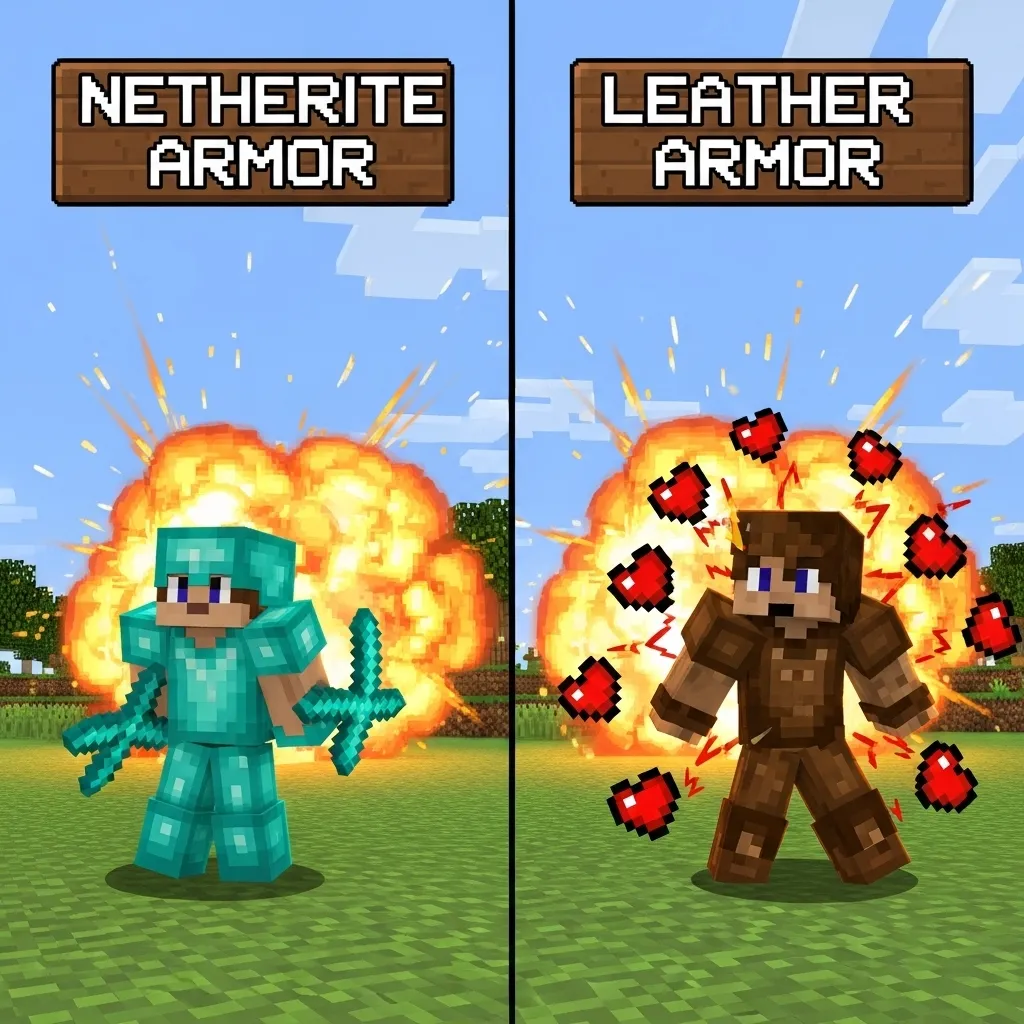
Currently, Netherite is king for raw defense; that is simply how the game is balanced.
But maybe a lighter armor set offers an unexpected advantage against Wind Charges.
For instance, increased mobility might let you recover position faster than someone simply tanking the damage.
Blast Protection vs. General Armor Defense
The real secret sauce here is the Blast Protection enchantment.
It directly mitigates explosion damage, making it essential for this counterplay meta.
You need to know the numbers. How much damage reduction does Blast Protection IV give?
Let’s visualize how different main armor types perform against a standard Wind Charge blast without factoring in enchantments first.
A bar chart comparing the base damage reduction percentage across different standard armor materials against explosions.
As you can see, Diamond and Netherite pull far ahead in base mitigation.
But this chart does not tell the whole story about Wind Charges.
The Role of Blast Protection Enchantments
When you add Blast Protection to that base, things change dramatically.
Blast Protection IV cuts explosion damage by 64 percent.
This reduction applies after the base armor mitigation calculation.
For true Wind Charge counterplay, you must pair the strongest base armor with this enchantment.
If you are optimizing movement and combo potential, maybe you are interested in how precise attacks work.
Learning hit selecting and S-tapping can give you the edge when you have a moment to breathe post-blast.
Here is a quick look at the effective damage reduction on Netherite armor with different enchantment levels:
| Enchantment Level | Total Effective Reduction | Status |
|---|---|---|
| None | 88% | Vulnerable |
| Blast Prot I | ~91.9% | Slightly Better |
| Blast Prot IV | ~96.6% | Optimal Defense |
Notice the diminishing returns as you stack enchantments.
The difference between Protection IV and Blast Protection IV is crucial here.
General Protection IV only gives 16% blast damage reduction.
That is a massive gap compared to the 64% from its specialized counterpart.
If you are trying to avoid being blown off cliffs, you need to minimize that knockback, too.
While Netherite’s knockback resistance helps, standard enchantments do not directly change how far you fly.
This is why mastering defensive positioning and perhaps even ghost shielding become your secondary defense layer.
What armor setup do you think balances survivability and mobility best when facing constant Wind Charge pressure?
Conclusion: Future-Proofing Your Defense Against Explosive Attacks
We’ve looked at the armor, the timing, and the sheer reaction speed needed.
But the fight against Wind Charges isn’t just about this moment; it’s about what comes next.
Truly mastering blast protection is about building a defense that scales.
You need to think ahead, acting like a true strategist preparing for the next update.
The meta is always moving, and what works today might fail tomorrow.
Adapting to the Ever-Changing PvP Landscape
Staying ahead requires constantly adapting your approach.
You can’t just rely on that one perfect shield block forever.
It is wise to explore other defensive and offensive maneuvers.
For instance, knowing how to effectively use your sword or Mace matters.
Sometimes the best defense is a perfectly timed counter-attack.
Learning advanced combat mechanics will keep you safe.
Check out guides on techniques like master hit selecting and S-tapping to stay sharp.
These skills translate directly into better positioning.
Better positioning means you avoid the blast entirely!
The Role of Reaction Time and Practice
No armor perfectly negates skill gaps. Your reaction time is key.
The faster you see the charge, the faster you can prepare.
Practice keeps your muscle memory sharp for shielding, block-hitting, or dodging.
We need to see how players measure up in high-stakes scenarios.
Data shows that even small advantages matter when explosions fly.
A bar chart illustrating the percentage of survival against a standard Wind Charge explosion based on reaction time windows in milliseconds.
As you can see, being fast drastically changes the odds.
If you want to improve your speed, upgrading your hardware can help.
A low-latency setup can shave off precious milliseconds.
It is essential to reduce input lag for competitive success.
Looking Ahead: Anticipating Future Meta Shifts
Future-proofing means anticipating what your opponents will try next.
If everyone masters blast protection armor, the meta shifts again.
Will players start using more complex traps instead?
Perhaps we will see more focus on trapping opponents near Sweet Berry Bushes.
Alternatively, the meta may move toward exploiting terrain with movement tools.
Mastering movement is just as vital as your gear choices.
Consider how tools like Ender Pearls can offer quick escapes.
Do you have a reliable escape route mapped out?
Think about your general gamesense for these unpredictable moments.
How do you plan to keep your defense strong when everyone catches up to the current armor meta?