Ever feel like enemies can read your mind in PvP?
It’s frustrating! The Momentum Fade technique fixes that.
By tricking their aim with sudden stops, you can dodge hits and take control.
Let’s learn how to break their patterns and win in Bedrock.
Key Takeaways
- Disrupt enemy aim by abruptly breaking your movement momentum.
- Exploit the gap between human prediction and reaction time to dodge hits.
- Use Bedrock’s unique physics to make your hitbox harder to track.
- Combine sudden stops with explosive direction changes to control the fight.
Momentum Fade Technique Explained: Breaking Bedrock Aim Patterns
Have you ever felt like your opponent can just lock onto you, no matter what you do?
It’s a frustrating feeling, almost as if they’re reading your mind.
But what if you could make them miss just enough to turn the fight around?
That’s exactly what the Momentum Fade technique is designed to do in Minecraft Bedrock PvP.
It’s all about making your movements unpredictable.
You essentially trick your opponent’s brain into expecting one thing, only to do something else entirely.
The Core Idea: Faking Them Out
Think of it like a basketball player faking a shot or a defender faking a pass. They move in a way that suggests one action, but then quickly pivot to another.
In Minecraft, this translates to disrupting their aim.
Most players unconsciously develop patterns in their movement and aiming.
The Momentum Fade targets those patterns.
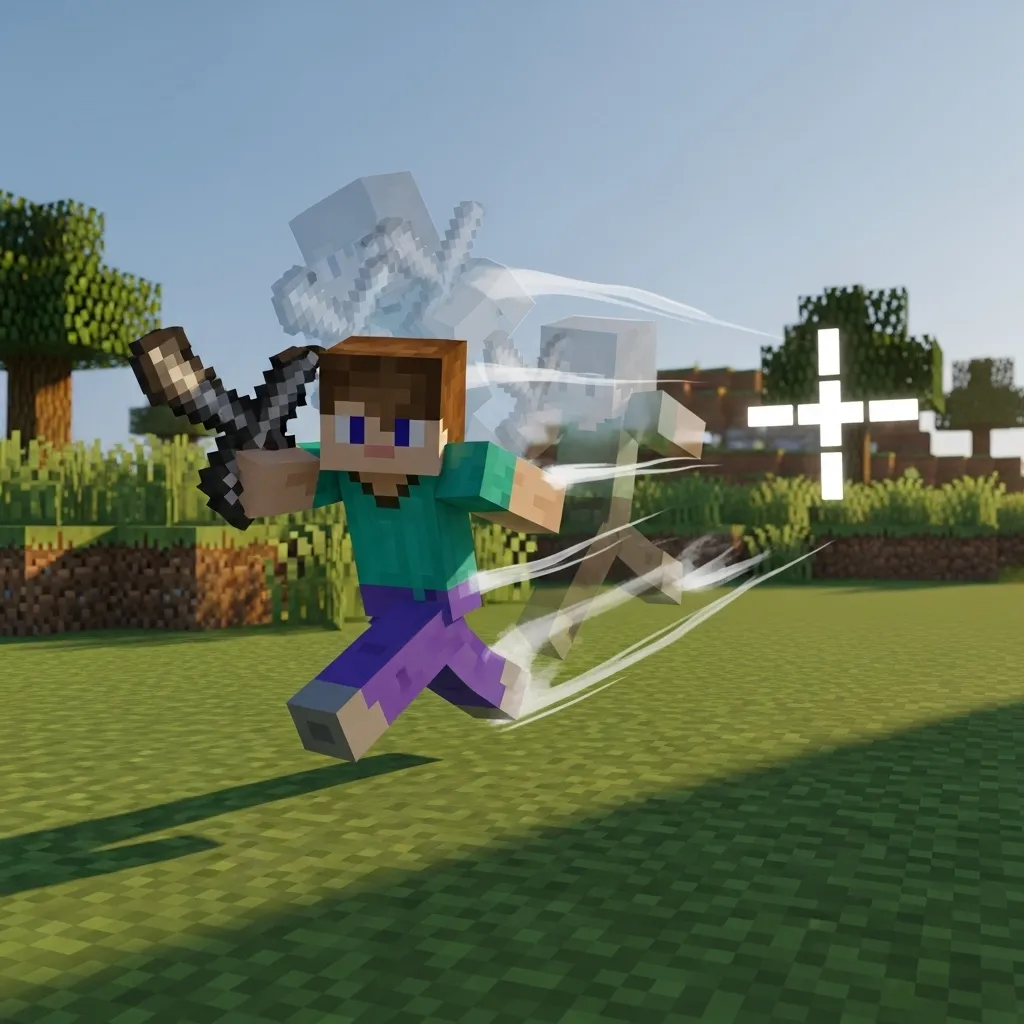
When you use this technique, you temporarily break the “momentum” of your own movement.
This forces your enemy to adjust rapidly, often causing them to over-aim or under-aim.
How to Execute a Momentum Fade
It’s simpler than it sounds, but timing is everything. Here’s how you do it:
- Establish a pattern: Start by moving in a somewhat predictable way, perhaps a straight line or a consistent strafe.
- The “Fade” moment: For a split second, you dramatically slow down, stop moving forward, or even briefly move backward.
- Explosive direction change: Immediately after the fade, you sprint or move rapidly in a completely different direction.
This quick shift, from perceived momentum to a sudden halt and then new momentum, totally messes with their crosshair.
They expect you to keep going, but you don’t.
It can feel a bit clunky at first.
The key is to make the “fade” brief-just long enough to throw off their prediction, but not so long that you become an easy target.
Why It Breaks Aim Patterns
Human opponents rely heavily on prediction in fast-paced PvP. Our brains are wired to anticipate where things will go next.
When you introduce an unexpected stop or direction change, you force them to stop predicting and start reacting. Reacting is always slower than predicting.
The average human visual reaction time is about 273 milliseconds. This might seem fast, but in intense PvP, even a fraction of a second can decide the fight.
A bar chart showing Average Simple Visual Reaction Time (273ms) and Estimated Time to Adjust to Unpredictable PvP Movement (400ms), based on Human Benchmark and general physiological studies.
When you use the Momentum Fade, you push their reaction time into that higher, more challenging category.
You exploit the gap between how fast they think you’ll move and how you actually move.
Integrating the Fade into Your PvP
The Momentum Fade isn’t a stand-alone trick; it’s best used as part of a larger strategy. It pairs wonderfully with other movement techniques.
For instance, after a few consistent micro strafes, a quick Momentum Fade can create a huge opening.
Or, use it when you’re slightly out of range to bait an opponent into chasing you, then fade and counter-attack.
Key Benefits of Using Momentum Fade:
- Creates openings: Forces opponents to readjust their aim, giving you a chance to land critical hits.
- Controls engagement: You dictate the pace and flow of the fight, rather than simply reacting to your enemy.
- Reduces incoming damage: By making yourself harder to hit, you take less damage overall.
- Mental advantage: Frustrated opponents often make more mistakes, giving you a psychological edge.
Practice is vital to master the timing.
You can work on this technique during your Minecraft PvP practice drills.
Focus on making the “fade” part smooth and seamless, almost like a stutter step.
How do you usually try to throw off your opponent’s aim in Bedrock PvP?
The Science of Deception: Bedrock Physics & Hitbox Manipulation
Bedrock’s Shifty Movements: A Dancer’s Dilemma
Ever feel like fighting in Minecraft Bedrock is a bit like dancing on ice? Things can feel pretty slippery.
Unlike some other versions, Bedrock’s movement physics have a unique feel.
Your sprint can reset in ways that catch you off guard, and knockback can be a little less predictable.
This “floaty” or “shifty” feeling might seem like a disadvantage at first. But for us, it’s a secret weapon!
It means enemies often struggle to lock onto a consistent pattern when you move.
Their brains try to guess your next step, and Bedrock’s physics let us break those guesses.
Think of it as creating intentional chaos in your movement. We use the game’s own rules to our advantage.
Peeking at Player Hitboxes
Alright, let’s talk about hitboxes. Imagine an invisible box wrapped tightly around your character.
This is your hitbox, and it’s what determines if an enemy’s attack actually lands.
In Bedrock, your hitbox doesn’t actually change size. It stays pretty much the same shape.
However, your movement can make that static box seem incredibly difficult to hit. It’s all about how you make your hitbox move through space.
Quick changes in direction, jumps, and even how you position yourself can manipulate an enemy’s perception.
They see a target, but your precise movements make that target feel like it’s dodging and weaving.
This is where techniques like micro strafing come in handy. It’s about making small, unpredictable shifts that throw off your opponent’s aim.
Why Deception Works So Well
Our brains are wired to find patterns. When we play PvP, we subconsciously try to predict where our opponent will go next.
We build mental “aim patterns” based on what we expect.
The Momentum Fade technique thrives by smashing those expectations. It combines Bedrock’s unique physics with clever hitbox manipulation.
You’re not just moving; you’re creating a confusing visual for your opponent. You make their aim prediction systems fail.
Here are the key ingredients for this deception:
- Unpredictable Movement: Using Bedrock’s less rigid physics to your advantage.
- Perceived Hitbox Shift: Making your fixed hitbox feel like a moving target to enemies.
- Breaking Patterns: Directly countering your opponent’s natural aim habits.
By understanding these core concepts, you’re not just randomly moving. You’re strategically deceiving.
How else can knowing these game mechanics give you an edge in combat?
Executing the Fade: Step-by-Step Movement Inputs
Understanding the Core Principle
Imagine you’re playing a game of tag, and your friend always runs in a straight line.
Easy to catch, right?
But what if they suddenly juke sideways, making you stumble?
That’s the basic idea behind the Momentum Fade technique in Bedrock PvP. It’s about breaking predictable movement patterns that your opponent expects.
The goal is to trick their aiming software or their muscle memory into misfiring, giving you a precious moment to strike back or escape.
Step-by-Step Movement Inputs
Executing the fade isn’t super complicated, but it takes practice to make it feel natural. Think of it like a dance where you’re constantly changing partners.
Here’s how you can perform the Momentum Fade, step-by-step, to throw off your opponent’s aim and create openings for yourself.
Step 1: Initiate Forward Momentum and Strafe
You start by moving forward, usually with a sprint, towards your opponent. This establishes a clear movement pattern for them to lock onto.
Then, immediately introduce a sideways strafe, either left or right. This is your initial commitment to a direction, like setting up a punch.
- Input: Hold down your forward movement key (W) and either your left strafe (A) or right strafe (D) key.
- Why: You need to appear committed to a path for your opponent to react to it.
Step 2: The Quick “Fade” Input
This is where the magic happens. After a very short burst of strafing in one direction (A or D), you’ll quickly tap the opposite strafe key.
It’s not a sustained strafe, but a quick, flick-like press. Think of it as a momentary juke, like a sudden twitch in your movement.
This rapid change of direction is what “fades” your momentum and breaks the enemy’s aim lock.
It’s similar to how you might counter strafe, but the timing is much quicker and less sustained.
- Input: If you were holding ‘A’, quickly tap ‘D’ and release it. If you were holding ‘D’, quickly tap ‘A’ and release.
- Timing: This should be a very brief input, almost immediately after starting your initial strafe. It needs to be precise.
Step 3: Resume or Change Direction
After the quick fade, you can either continue your original strafe or switch to a new direction entirely. This keeps your opponent guessing.
The key is to avoid becoming predictable again. Mix up your strafing patterns, use vertical movement, and adapt to your enemy’s reactions.
Consider integrating techniques like advanced vertical knockback and spacing to further disrupt their aim and control the fight.
Here’s a look at common movement mistakes players make when trying to maintain combat pressure:
A pie chart showing common PvP movement mistakes: Predictable Strafe (25%), Lack of Vertical Movement (20%), Standing Still (30%), Over-committing to One Direction (15%), No Quick Direction Changes (10%).
This chart highlights why mixing up your inputs is crucial for sustained combat advantage.
Practice and Refinement
The Momentum Fade is all about feel and timing. It won’t work perfectly every time, especially against players who also use advanced movement.
The more you practice, the more intuitive these rapid input changes will become. Try it in practice servers or against bots to get a feel for the rhythm.
How do you personally combine sudden direction changes with other movement techniques to keep your opponents on their toes?
Adapting to Opponents: Identifying & Countering Aim Patterns
Watching Your Opponent’s Moves
Ever feel like you’re fighting someone who just knows where you’re going?
It’s not magic!
They’ve probably figured out your movement pattern.
Just as you learn from others, your opponents try to learn from you.
The first step to countering someone’s aim is to understand how they aim.
Think of it like a dance.
Are they always dancing in a straight line, or do they jump around unpredictably?
Spotting Common Aim Patterns
In Minecraft PvP, players tend to fall into a few general aiming habits. Learning to quickly identify these can give you a huge advantage in a fight.
You can even improve your own game by watching recorded fights. Learning how to VOD review your gameplay helps you see patterns in yourself and others.
Here are some common types of aim you’ll see:
- Tracking Aim: This player keeps their crosshair glued to you as you move. They try to follow your every dodge.
- Predictive Aim: These players don’t just react; they try to guess where you’ll be next. If you often strafe in the same rhythm, they’ll pick up on it.
- Flick Aim: Less common in constant combat, but good flickers quickly snap their aim to hit you, especially after you make a sudden movement.
Using Momentum Fade to Break Aim
This is where the Momentum Fade technique truly shines. It’s all about tricking your opponent’s brain and breaking their established aim patterns.
Imagine you’re running, then suddenly stop. That unexpected halt makes their tracking aim completely miss. It forces them to re-adjust quickly.
When someone is using predictive aim, your goal is to make their predictions wrong. The Momentum Fade’s sudden changes are perfect for this.
You interrupt the flow of their anticipation, leaving them hitting empty air. This brief moment of confusion is your chance to strike.
Countering Specific Aim Styles with Momentum Fade
Let’s look at how momentum fade can directly mess with different types of aim patterns:
- Against Tracking Aim: If an opponent is consistently tracking you, a sharp, sudden stop or a quick reverse in your movement using momentum fade will make their aim overshoot. They’ll have to drag their mouse back, buying you precious milliseconds.
- Against Predictive Aim: These players often expect you to continue moving in a certain direction. By performing a momentum fade, you intentionally defy that expectation. You break their rhythm, making their pre-aimed clicks miss their mark. This is vital for predicting and countering enemy movement effectively.
- Against Flick Aim: While flickers thrive on quick, precise movements, constant, predictable movement makes it easier for them to land their shots. Introducing momentum fades forces them to make more difficult, reactive flicks, often leading to missed hits due to the unexpected deceleration or acceleration.
The core idea is to introduce chaos into your movement. You want to be the player who is impossible to “read.”
It’s like throwing a curveball when they expect a fastball. You keep them guessing, always a step behind your actual position.
Mastering Momentum Fade: Progressive Drills & Avoiding Common Errors
Building Your Momentum Fade Skills
Learning the Momentum Fade technique isn’t just about knowing what to do. It’s about practicing until it feels natural, like breathing.
Think of it like learning to ride a bike. You start slow, wobble a lot, and eventually, you’re speeding along without even thinking.
These progressive drills will help you get there, step by step.
Basic Movement Drills
First, let’s get comfortable with the core idea of changing your momentum.
Find an open area in a creative world or a practice server. No enemies yet, just you and your movement.
Drill 1: The “S” Curve Practice
Start by running in a straight line. Then, without slowing down, quickly shift your direction to form a smooth “S” shape.
Focus on smooth, tight turns. Don’t stop. Imagine dodging an invisible attack.
Practice moving left, then right, then left again. Keep it fluid.
Drill 2: Random Direction Changes
This drill helps break predictability. Run around, and every 1-2 seconds, sharply change your direction.
Don’t fall into a pattern. Go left, then forward-right, then back-left. Mix it up.
The goal is to be unpredictable even to yourself.
Integrating Aim with Movement
Now, let’s add your crosshair into the mix. You need to fade and keep your eyes on the prize.
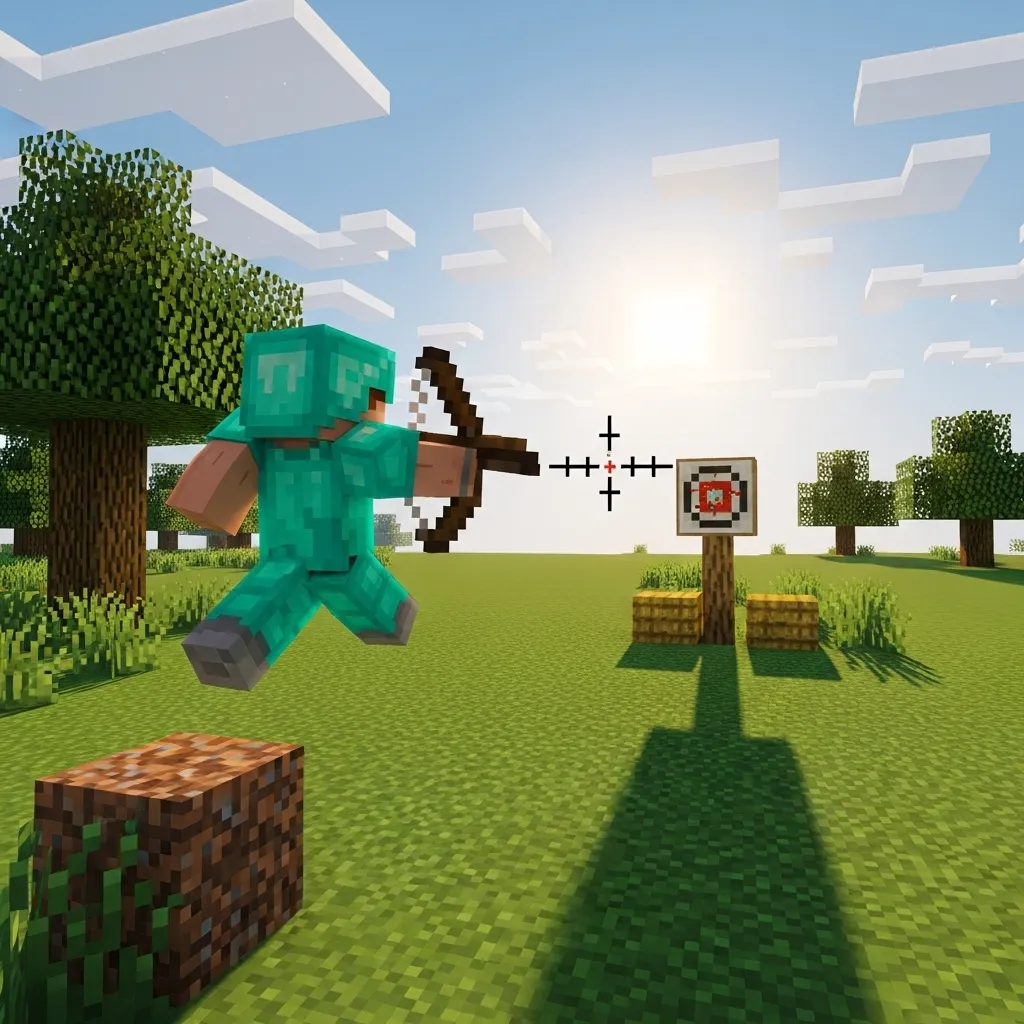
Drill 3: Target Tracking Fade
Place a target dummy or a single block in front of you. Stand a medium distance away.
Begin a Momentum Fade pattern – quick changes left and right – while constantly keeping your crosshair locked onto the target.
This teaches you to maintain your aim while your body is shifting rapidly. It’s harder than it sounds!
Drill 4: Strafing with Intent
Practice against a friend or a bot. Have them stand still, or just move predictably.
Your goal is to hit them consistently while performing your Momentum Fade. Focus on making each hit connect.
This is where you start blending offensive and defensive movement.
Avoiding Common Momentum Fade Errors
Even the pros make mistakes. Knowing what to watch out for can save you from getting caught.
Let’s look at some typical pitfalls when trying to master this technique.
| Common Error | Why It’s a Problem | How to Fix It |
|---|---|---|
| Becoming Predictable | Repeating the same “fade-left, fade-right” rhythm. | Vary your timing and length of movement. Mix up short, sharp fades with longer ones. |
| Over-Committing | Moving too far or too long in one direction. | Make your directional changes quick and decisive. Don’t linger in one strafe. |
| Losing Your Own Aim | Fading so hard you can’t hit your target. | Practice keeping your crosshair placement steady during drills. Slow down if needed. |
| Ignoring the Environment | Bumping into blocks or falling off ledges mid-fade. | Be aware of your surroundings. Use the environment to your advantage, not as an obstacle. |
Don’t Be a Robot
The biggest mistake is becoming predictable. If your enemy can guess your next move, your fade is useless.
Think about how to integrate other PvP practice drills and movement techniques to make your fading truly erratic.
Randomness is your best friend here. Always try to surprise your opponent.
How do you personally find new ways to practice your movement in Bedrock PvP?
Your New PvP Secret Weapon
So, there you have it! The Momentum Fade technique isn’t just a fancy trick; it’s a strategic way to turn the tables in Minecraft Bedrock PvP.
By understanding how to break aim patterns and leverage Bedrock’s unique physics, you’re not just playing; you’re actively outsmarting your opponents.
Remember, it’s all about making yourself unpredictable. Those quick, sudden shifts in movement force your enemy to react, giving you the upper hand.
Practice makes perfect, so head into those drills and start experimenting. Soon, you’ll be dodging hits and landing critical strikes like a true PvP master!
Frequently Asked Questions
What is the Momentum Fade technique in Minecraft Bedrock PvP?
It’s a movement technique designed to disrupt your opponent’s aim. You briefly fake a direction or stop, then quickly change direction, making you harder to hit.
Why does the Momentum Fade work so well in Bedrock PvP?
It exploits human prediction. Most players anticipate your next move.
By suddenly changing momentum, you force them to react instead of predict, which is slower.
Bedrock’s ‘floaty’ physics also helps make your movements seem more chaotic and difficult to track.
How often should I use the Momentum Fade in a fight?
It’s best used as part of a larger strategy. Don’t spam it! Mix it with other movement techniques like micro strafing to remain truly unpredictable.
Using it strategically can create openings or reduce incoming damage.
Is the Momentum Fade difficult to learn for new players?
It might feel a bit clunky at first, as timing is crucial. However, it’s simpler than it sounds once you get the hang of it.
Consistent practice in PvP drills will help you master the ‘fade’ moment and make it feel natural.
Does this technique manipulate my hitbox?
Your actual hitbox size doesn’t change. Instead, the technique manipulates your opponent’s perception of your hitbox.
Your unpredictable movements make your static hitbox feel like a difficult, constantly moving target, causing enemies to mis-aim.