Ever feel like an opponent in Minecraft Bedrock is hitting you from impossible distances? You might be facing a reach hack.
Here is how to spot the signs, test for cheats, and tell the difference between a skilled player and a hacker.
Key Takeaways
- Standard Bedrock attack reach is 3 blocks walking and 4.5 sprinting.
- Reach hacks allow players to land consistent hits from illegal distances.
- Watch for visual cues like lazy movement and delayed hit particles.
- Use a simple block-counting test to confirm if a player is cheating.
- Distinguish between consistent hacking and sporadic internet lag.
Understanding Reach Hacks and Legitimate Bedrock PvP Distance
What Exactly is a Reach Hack?
Imagine you’re in a Minecraft Bedrock PvP fight, trading blows with an opponent.
Suddenly, you get hit from a distance that just feels… wrong.
You think to yourself, “How did they even hit me from there?”
That feeling might be your first clue about a “reach hack.”
A reach hack is essentially a cheat that lets players hit you from further away than the game normally allows.
It gives them an unfair advantage by extending their attack range.
Instead of the usual few blocks, they might be hitting you from five, six, or even more blocks away.
This bypasses the game’s built-in combat rules.
It’s like having really long arms in the game that no one else has.
The Official PvP Reach in Minecraft Bedrock
In regular Minecraft Bedrock PvP, there are specific limits to how far you can hit an opponent.
These distances are built into the game’s mechanics to ensure fair play.
Understanding these limits is super important for spotting a potential cheater.
Generally, your standard attack reach is limited.
However, certain actions can slightly extend this reach, even legitimately.
For example, sprinting gives you a bit more reach than standing still.
Here’s a quick look at the typical combat ranges:
| Action | Approximate Reach (Blocks) |
|---|---|
| Standard Attack (walking/standing) | 3.0 |
| Sprinting Attack | 4.5 |
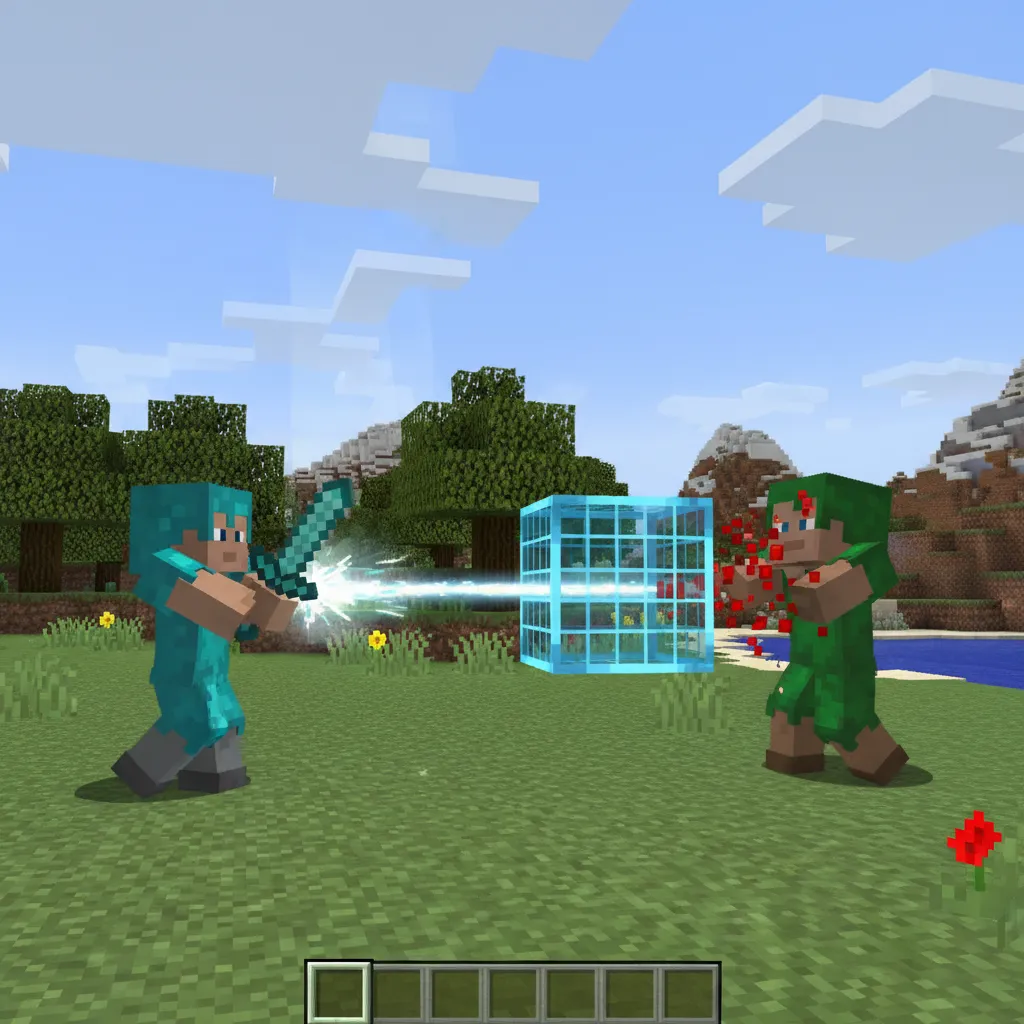
It’s important to remember that these are the game’s official, intended distances.
Anything significantly beyond these values in a normal PvP encounter should raise a red flag.
A bar chart showing Minecraft Bedrock player attack reach: Standard Attack (3.0 blocks) and Sprinting Attack (4.5 blocks).
Why Perception Can Be Tricky
Sometimes, what looks like a reach hack might actually be legitimate, even if it feels unfair.
Several factors can make a player’s hits appear to come from further away.
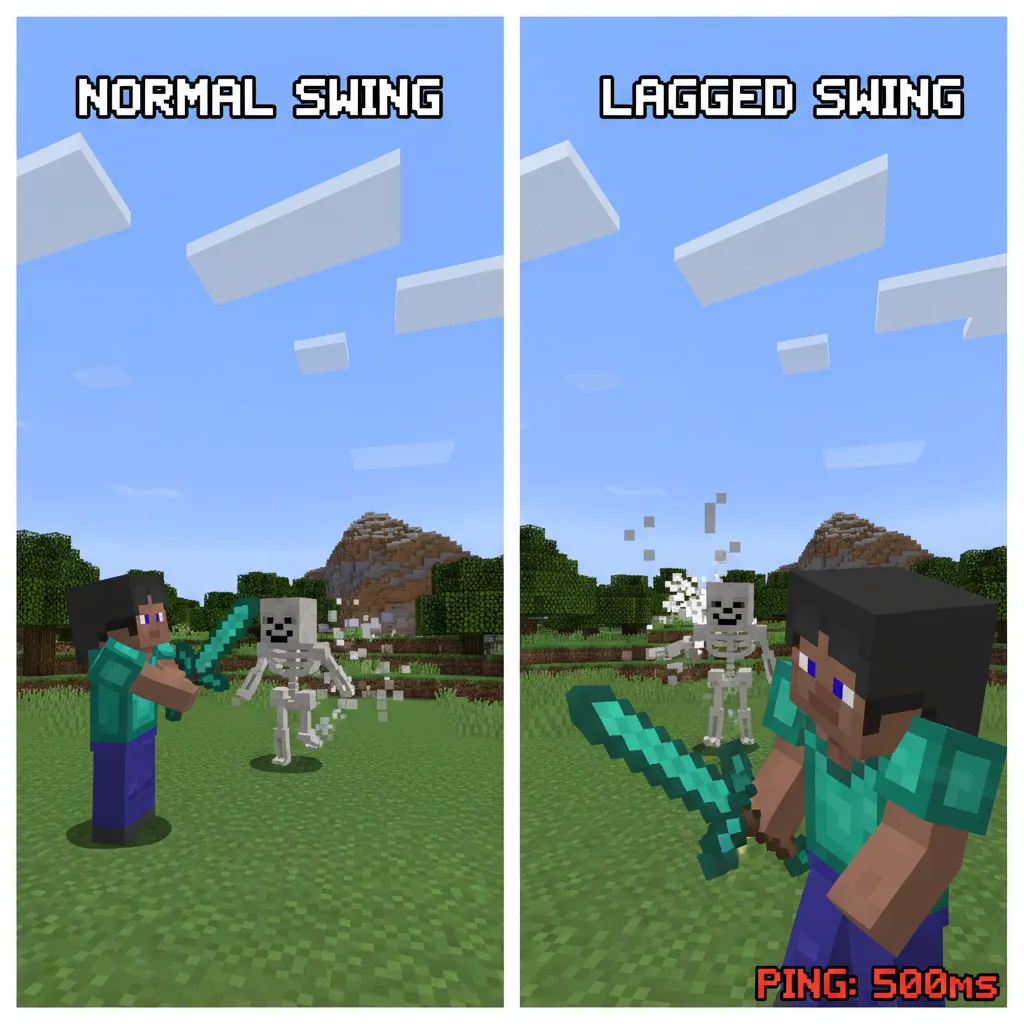
One common culprit is internet latency, often called “ping.”
If either you or your opponent has high ping, hits might register on the server differently than what you see on your screen.
This can lead to “desync,” where the game world you see isn’t perfectly aligned with the server’s truth.
Movement also plays a huge role.
Players who are good at crosshair placement and strategic movement can maximize their legitimate reach.
They might run towards you at the exact moment they swing, effectively extending their hitbox’s perceived range.
Similarly, smart spacing and understanding vertical combat can also make hits seem longer.
It’s all about how players position themselves and time their attacks within the legal boundaries of the game.
So, how do you learn to tell the difference between a skilled player making perfect use of game mechanics and someone outright cheating?
Behavioral “Fingerprints”: Visual Cues of Reach Cheats in Action
The Unnatural Reach: Hitting From Too Far
Imagine you’re in a Minecraft Bedrock PvP fight. You’re carefully spacing, keeping your distance, and trying to outplay your opponent.
Suddenly, you get hit. But wait-they were clearly out of your normal reach range! How did that happen?
This is the most glaring “fingerprint” of a reach cheat. It feels like they’re hitting you through an invisible wall, far beyond what the game normally allows.
Regular Minecraft PvP has a set combat range. A cheater extends this, making fair fights impossible.
Legitimate players work hard to maximize their natural range through good positioning and mastering crosshair placement. A cheater bypasses all that effort.
Movement That Doesn’t Make Sense
When you fight someone skilled, their movement is often fluid and calculated. They strafe, jump, and try to predict your moves.
A player using reach hacks might move differently. They might not need to strafe or position themselves as expertly.
Why? Because they can just hit you from afar. This can lead to less strategic or even awkward-looking movement patterns.
If someone is hitting you consistently without seeming to try to close distance or match your movements, be suspicious.
Suspicious Aim and Consistency
Another sign is how they aim. Sometimes, a reach hacker’s aim might look a bit… off. Their crosshair might not be perfectly on you, yet the hits keep coming.
This is because the cheat extends their hitbox, giving them a larger “target area” to hit.
They might not need pinpoint accuracy because the cheat is doing the heavy lifting.
Also, notice if they maintain combos even when you think you’ve created enough distance. It can feel like you’re stuck in a magnet.
Key Visual Indicators of a Reach Cheat
When you’re trying to figure out if someone is using a reach hack, keep these visual cues in mind:
- Unusually Long Hits: They hit you when they appear to be two to four blocks away, outside the normal combat range.
- Strange Hitboxes: You get hit even if their visual aim seems slightly off your character model.
- Consistent Comboing From Distance: They manage to keep you in a combo even when you are trying to disengage by creating distance.
- Lack of Strategic Movement: They don’t seem to put much effort into advanced movement techniques like micro-strafing or circling.
- Instantaneous Hits: As soon as you come into their line of sight, even at maximum perceived range, you’re hit.
A bar chart showing common player reports of PvP cheats: Unusual Reach (65%), Aimbot (50%), Speed (40%), Killaura (35%), Fly/Nofall (20%). Data based on informal community forum discussions about Bedrock Edition PvP cheating.
By observing these “fingerprints,” you can start to tell the difference between a genuinely skilled player and someone who’s getting an unfair advantage.
Client-Specific Reach Manifestations: The Hacker’s Signature
The Silent Strikers: Subtle Reach Signatures
Not all reach hacks scream for attention. Some clients are designed to be incredibly subtle.
They might give a player just a little extra reach, enough to feel unfair but not immediately obvious.
It’s like they’re barely scratching the edge of what’s possible, making you question your own perception.
You might notice hits landing when their weapon doesn’t seem to touch you, or when you feel just out of range.
Real players focus on precise hit selection, aligning their crosshair perfectly.
A hacker might hit without that same careful alignment, making their combat feel unnaturally easy.
Unnatural Player Movement
One of the biggest giveaways for a reach hacker is often their movement.
Why would someone aggressively close distance if their hits connect from afar?
You might see them hanging back, almost casually, while still landing consistent blows.
Legitimate players are constantly adjusting, using techniques like micro-strafing to maintain optimal distance.
Hackers, however, don’t always need to perform such precise movements.
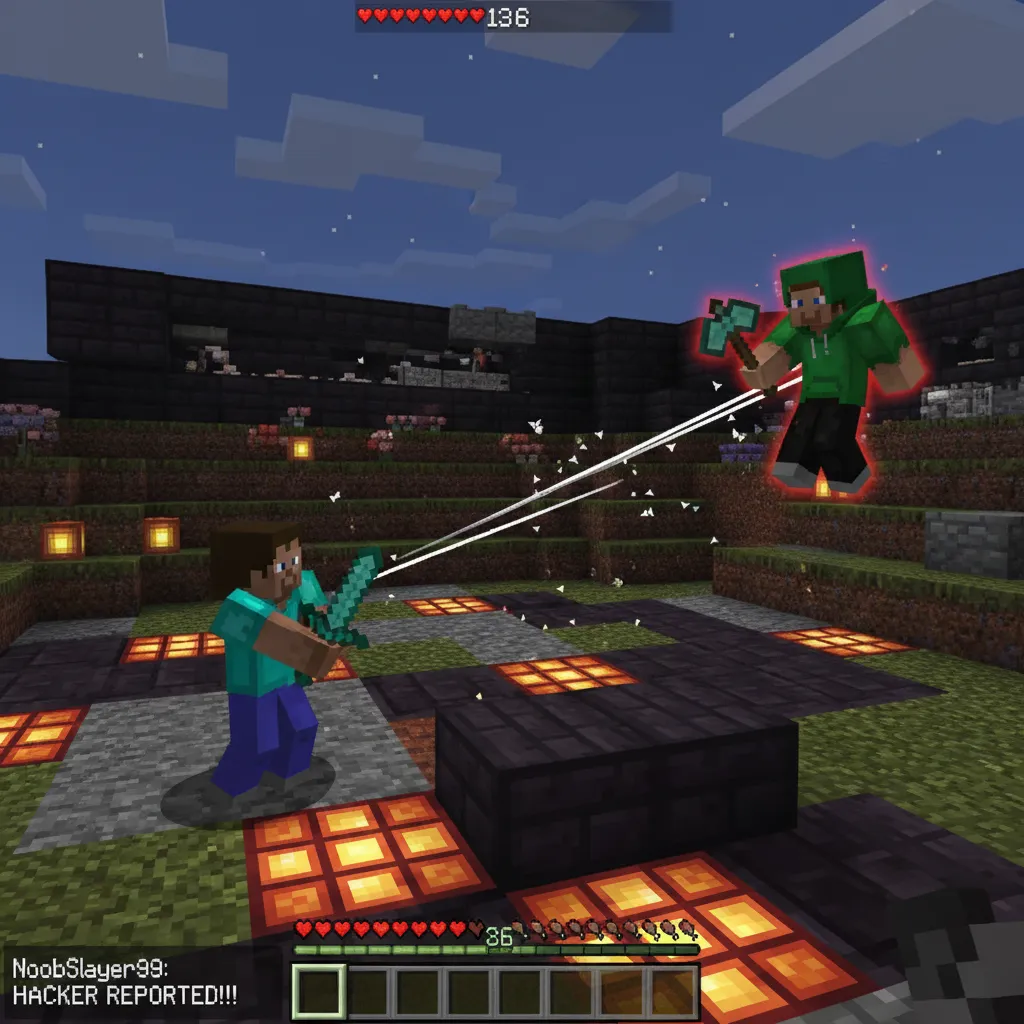
Their positioning can look lazy or too confident for the situation they are in.
Analyzing Hitbox and Attack Animations
Sometimes, the “signature” of a reach hack comes down to tiny animation glitches or sound cues.
Minecraft’s visual and audio feedback for hits is usually very clear.
When a reach hack is active, these cues can become desynchronized or appear under odd circumstances.
Here are some specific things to watch out for:
- Ghost Hits: You hear a hit sound, but no visual indication of contact, like particles or a weapon swing.
- Delayed Particles: Hit particles appear long after the weapon animation seems to have finished, or far from the actual player model.
- Snap-to-Target: The hacker’s crosshair might seem to quickly “snap” onto you for a split second, even if they aren’t directly looking at you.
- Consistent Range: They maintain a very consistent, slightly-too-far distance, always landing hits without needing to adjust much.
- No Movement Required: Hits register even when the opponent isn’t moving towards you at all.
Distinguishing from Lag
It’s super important not to confuse a reach hack with simple network lag or ping issues.
Sometimes, high ping can make hits appear to land from further away than they actually did.
This is because of the delay between what you see on your screen and what the server registers.
A good way to tell the difference is consistency. Lag is often sporadic and unpredictable.
Reach hacks, however, tend to be very consistent. The suspicious hits will happen almost every time.
Moderator Toolkit: In-Game Tests for Reach Confirmation
The Observer’s Edge: Watching for Suspicious Hits
As a moderator or even just an alert player, your eyes are your first and best tool.
Reach hacks make a player hit you from farther away than they should be able to.
In Minecraft Bedrock PvP, the standard melee attack range is around 3 blocks.
If you keep getting hit when you feel like you’re clearly out of range, pay close attention.
Look for hits that land when there are too many blocks between players.
This often feels like they are hitting through walls or around corners.
It’s like someone poking you with an invisible, super-long stick.
The Block-Counting Method: Testing Reach Limits
Sometimes, just watching isn’t enough to be sure. You need concrete proof.
This is where in-game testing comes in. You can set up a controlled environment.
The goal is to measure the exact distance a player is hitting from.
This method helps remove doubt and gives you numbers.
Setting Up Your Test Area
First, find a flat, open area. A superflat world or a deserted part of a server is perfect.
You need to be able to easily count blocks.
Place two distinct blocks on the ground, exactly 4 blocks apart, to mark a testing line.
You can use something bright like wool or concrete to make them stand out.
Executing the Test with the Suspect Player
Have the suspect player stand on one marker block.
You, or another reliable player, should stand on the other marker block.
Now, try to hit each other without moving from your spots.
A legitimate player should generally not be able to hit the other from this 4-block distance.
Minecraft’s official melee reach is about 3 blocks for Bedrock Edition.
Here’s how to conduct the test:
- Have both players stand on their respective marker blocks.
- Instruct the suspect player to try hitting you repeatedly.
- Carefully observe if any hits register.
- If hits land, move one of the players back by half a block, then repeat the test.
- Continue moving back in small increments until hits stop registering.
- Count the total blocks between the players’ feet at the point where hits still connect.
Anything consistently over 3 blocks is suspicious.
Remember that even a slight delay or high ping can sometimes make hits appear delayed, but it shouldn’t extend actual reach.
Analyzing the Evidence: What Your Tests Tell You
If your block-counting test consistently shows hits at 4 blocks or more, it’s a strong indicator.
Normal players simply cannot achieve such a reach.
Beyond this, review combat logs if your server provides them. They often record hit distances.
Compare these logs to the in-game observations you made.
Also, consider the player’s movement and spacing techniques. Do they move in a way that suggests they know they have extended reach?
Catching a reach hacker requires both careful observation and sometimes, a little detective work on your part.
What other creative in-game tests could players or moderators use to pinpoint unfair advantages in Bedrock PvP?
Latency vs. Malice: Distinguishing Desync from True Reach Hacks
The Confusing World of Online Combat
Ever been in a Minecraft Bedrock PvP fight, minding your own business, when suddenly you get hit from what feels like a mile away?
Your first thought might be, “They’re totally hacking!” It’s a common reaction. But hold on a second.
Sometimes, what looks like a super-powered reach hack is actually just the internet playing tricks on you.
What is Latency (Desync)?
Think of latency like a tiny delay in communication.
When you click your mouse or move your character, that information has to travel to the game server and back.
If that trip takes too long, you experience “lag” or “desync.” The game on your screen isn’t perfectly synced with what’s happening on the server.
This can make it seem like players are hitting you when they’re not even close, or that your hits aren’t registering.
It’s frustrating, right? According to a 2021 YouGov survey, 30% of online gamers in the US reported experiencing network latency at least once a week.
A bar chart showing that 30% of US online gamers experience network latency at least once a week, according to a 2021 YouGov survey.
A higher ping number means more latency. Even a super skilled player might appear to have crazy reach if their ping is through the roof.
They might be swinging where they think you are, and by the time the server catches up, it looks like they hit you from far away.
This is where understanding how to win with high ping comes into play for some players.
You can learn more about using utility items to win high ping Minecraft PvP.
What are True Reach Hacks?
Now, true reach hacks are a whole different beast.
This is when a player uses illegal client-side modifications (cheats) to extend their attack range beyond what the game naturally allows.
Minecraft Bedrock PvP normally limits your sword reach to around 3-4 blocks. A hacker can extend this to 6, 7, or even more blocks.
They are deliberately breaking the game rules to gain an unfair advantage.
How to Tell the Difference
It can be tough to distinguish, but here are some pointers to help you figure out if it’s lag or an actual cheat:
Signs of Latency/Desync:
- Inconsistent Hits: Sometimes they hit you from far, sometimes they don’t.
- Rubber-banding: Players (or you) suddenly jump back to a previous position.
- Delayed Reactions: Your hits register late, or block placement seems off.
- Other Players Lagging: If multiple players in the lobby seem laggy, it’s probably the server or your connection.
Signs of True Reach Hacks:
- Consistent “Impossible” Hits: The player consistently hits you from distances that are just not possible, every single time.
- No Visual Lag: Their movement and other actions appear smooth, but their hits are unnaturally far.
- Predictable Long-Range Hits: They can chase you down and hit you from afar without needing to adjust much, even if you are moving unpredictably.
- Server-Wide Consistency: Other players don’t seem to be lagging, only this one player exhibits suspicious reach.
When in Doubt, Check Your Connection
Before you jump to conclusions, always check your own internet connection. A quick speed test can confirm if your ping is high.
If your connection is good and only one player seems to have super-long reach consistently, then you might be dealing with a genuine reach hacker.
Remember, patience and observation are key in figuring out if it’s a connection hiccup or someone trying to bend the rules.
What’s the most unusual “lag” or “hack” moment you’ve experienced in Minecraft Bedrock PvP?
Sharpening Your PvP Instincts
Stepping into the world of Minecraft Bedrock PvP can be a thrill, but encountering a reach hack can definitely sour the experience.
Remember, knowing the legitimate attack ranges, like the 3.0 blocks for standing and 4.5 for sprinting, is your first line of defense.
It’s easy to get confused by things like internet lag or really skilled players who maximize their movement.
But the key is to look for those telling signs-like unnatural consistency and impossible range-to ensure you’re making the right call.
Frequently Asked Questions
What is a reach hack in Minecraft Bedrock PvP?
A reach hack is a cheat that allows players to hit you from a much greater distance than the game usually permits.
This unfair advantage extends their attack range beyond the normal few blocks, making combat impossible to win fairly.
What is the official PvP reach in Minecraft Bedrock?
In standard Bedrock PvP, your attack reach is generally around 3.0 blocks when standing or walking.
When you’re sprinting, this reach can extend slightly to approximately 4.5 blocks. These are the intended, fair play limits.
Can high ping or lag make it look like someone is using a reach hack?
Yes, absolutely! Internet latency, or high ping, can cause what’s called ‘desync’ between your screen and the game server.
This can make hits appear to land from further away than they actually did, creating a false impression of a reach hack.
What are the main visual cues to spot a reach hack?
Look for consistent hits from unusually long distances, like two to four blocks beyond normal range.
Other signs include strange, lazy movement from the opponent, or getting continuously comboed even when you’ve created distance.
Do all reach hacks look the same?
Not always. Some reach hacks are very subtle, only adding a small amount of extra reach to avoid immediate detection.
You might notice hits landing when their weapon doesn’t seem to touch you, or when their crosshair is slightly off target.